
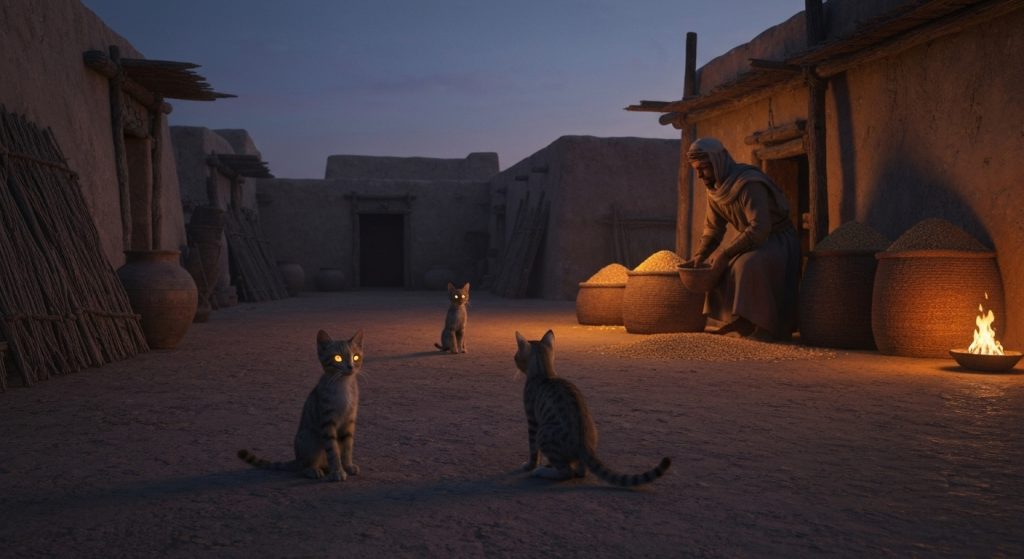

New genetic research is challenging long-held beliefs about when and how cats became our feline companions. The latest findings suggest that the process of cat domestication may have begun much earlier than previously assumed, painting a more complex picture of our relationship with these enigmatic animals.
Key Takeaways:
- Genetic evidence points to an earlier start for cat domestication.
- The process was likely more gradual and widespread than once thought.
- This discovery reshapes our understanding of early human-animal interactions.
Unraveling Ancient Pasts
For years, the prevailing theory placed the initial domestication of cats around 9,500 years ago in the Fertile Crescent, coinciding with the rise of agriculture. This new study, however, analyzes genetic markers that indicate a more extended and potentially earlier period of interaction between humans and wildcats, leading to their gradual taming.
The Genetic Detective Work
Scientists examined DNA from ancient and modern cats, looking for specific genetic signatures that would indicate a divergence from their wild ancestors. The patterns observed suggest that the selection for traits desirable to humans—such as reduced fear and increased sociability—may have been in play for a longer duration, potentially stretching back over 12,000 years.
Why This Matters
This revised timeline has significant implications for our understanding of early human societies. It suggests that humans and cats developed a mutualistic relationship earlier than we give them credit for. Cats may have been drawn to human settlements by rodents attracted to stored grains, and humans, in turn, benefited from pest control. This symbiotic relationship, forged over millennia, ultimately led to the diverse breeds of domestic cats we see today, from the sleek Siamese to the fluffy Maine Coon.
The findings also highlight the power of genetic analysis in rewriting historical narratives. As our scientific tools become more sophisticated, we can delve deeper into the past and uncover nuances that were previously hidden. This research is a testament to how much we still have to learn about the co-evolution of humans and the animal kingdom.
This article was based on reporting from Gizmodo. A huge shoutout to their team for the original coverage.