
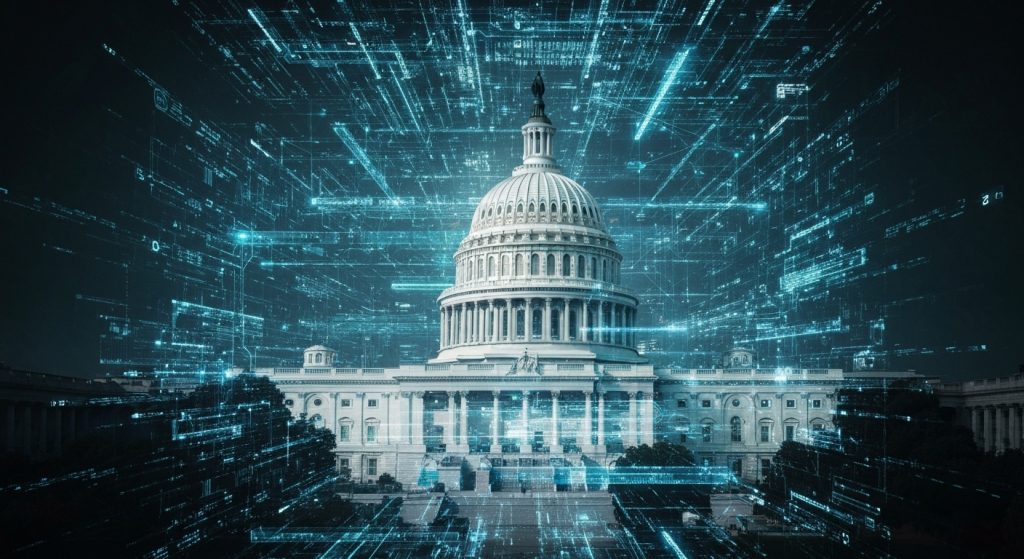

Artificial intelligence is rapidly transforming campaign strategies, with AI-powered super PACs poised to dominate the political landscape and potentially drown out genuine discourse in U.S. elections.
The AI Arms Race in Politics
The emergence of AI super PACs signifies a new era in political campaigning. These entities leverage advanced algorithms to micro-target voters with unprecedented precision, craft persuasive messaging at scale, and potentially spread disinformation faster than ever before. This sophisticated use of AI raises significant concerns about the integrity and fairness of democratic processes.

Key Takeaways
- AI super PACs are emerging as a powerful new force in U.S. elections.
- These groups utilize AI for hyper-targeted messaging and rapid content generation.
- Concerns are rising about AI’s potential to manipulate public opinion and drown out authentic political debate.
- The speed and scale of AI-driven campaigns present a challenge for regulatory bodies and voters alike.
Unprecedented Scale and Speed
Unlike traditional political advertising, AI-driven campaigns can adapt in real-time, test messages on small audiences, and then deploy the most effective ones across vast networks. This agility, combined with the ability to generate vast amounts of content – from social media posts to video snippets – allows AI super PACs to saturate the information ecosystem.
Experts worry that this flood of AI-generated content could overwhelm voters, making it difficult to discern factual information from sophisticated propaganda. The sheer volume can also push more substantive political discussions to the sidelines, reducing campaigns to a battle of algorithmic efficiency rather than a contest of ideas.
Why This Matters
The unchecked acceleration of AI in political campaigns poses a profound threat to the democratic process. Voters are already grappling with an information-saturated environment; AI super PACs threaten to make this even more challenging by introducing a level of automated persuasion that is difficult to track and counter. The potential for AI to amplify disinformation, manipulate public sentiment, and reduce political discourse to superficial, algorithmically optimized messages is a critical issue that demands immediate attention from policymakers, tech companies, and the electorate.
This development underscores the urgent need for greater transparency in political advertising and robust regulations to govern the use of AI in elections. Without proactive measures, the very foundation of informed consent in a democracy could be eroded.
This article was based on reporting from Gizmodo. A huge shoutout to their team for the original coverage.
Read the full story at Gizmodo